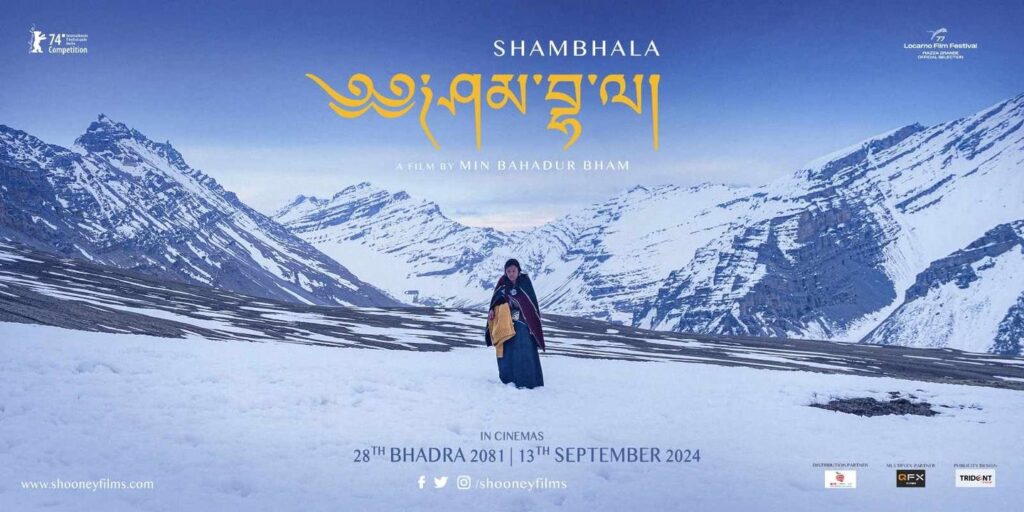
Shambhala, the latest feature by Nepalese director Min Bahadur Bham, is an exquisitely crafted drama set against the breathtaking backdrop of the Himalayas. Known for his previous work The Black Hen, Bham takes viewers on a slow, meditative journey through an intimate and epic tale of tradition, marriage, and self-discovery. However, its slow pacing may test the patience of viewers seeking more conventional storytelling.
Story
The film follows Pema (Thinely Lhamo), a young bride in a polyandrous marriage, whose husband Tashi (Tenzin Dalha) leaves for a trading voyage and subsequently goes missing. Pema’s journey to find him takes her through the snow-capped mountains of Nepal, alongside one of Tashi’s brothers, Karma (Sonam Topden). The story is as much about Pema’s inner journey as her physical one, examining the gender roles, social rituals, and cultural traditions of a remote Nepalese village. While the plot has elements of an existential quest, the film often sidesteps regular storytelling in favor of ethnographic detail, which may appeal to some but alienate others.
Cast
The cast of Shambhala brings a natural and grounded feel to the film. Thinely Lhamo shines as Pema, a resilient woman navigating the complexities of a patriarchal society. Tenzin Dalha’s portrayal of Tashi, though brief, adds to the intrigue of the plot, while Sonam Topden as Karma brings a subdued charm to the brother’s character. The chemistry between Pema and Karma remains subtle but believable, adding emotional depth to the slow-burning narrative. Supporting characters like Karma Shakya as Ram Sir, the schoolteacher, contribute to the village’s dynamic, but it’s Lhamo’s performance that anchors the film.
Cinematography and Setting
One of the most stunning aspects of Shambhala is its cinematography. Cinematographer Aziz Zhambakiyiv captures the remote Himalayan landscape in all its vast, natural glory. The long, wide shots emphasize the isolation of the characters, both physically and emotionally, from the modern world. These expansive visuals not only reflect the characters’ inner struggles but also highlight the rich cultural traditions of their village. However, this focus on ethnographic detail often overshadows the narrative, leading to a slower pace.
Acting and Characters
The actors deliver restrained yet powerful performances that align with the film’s meditative tone. Lhamo as Pema is particularly compelling, portraying the quiet strength of a woman navigating societal expectations. Sonam Topden as Karma offers a layered performance as a monk and a brother, torn between duty and potential love. The chemistry between Pema and Karma is understated but gradually grows in intensity, leaving much unsaid but felt. Karma Shakya, playing the schoolteacher Ram Sir, subtly influences the plot and Pema’s trajectory, while the younger brother, Dawa (Karma Wangyal Gurung), brings a youthful, rebellious energy to the film.
Themes and Symbolism
The film delves into themes of patriarchal oppression and the spiritual versus societal expectations placed on women like Pema. The journey serves as a metaphor for Pema’s personal quest for freedom, in contrast to the rigid traditions and rituals of her village. The symbolic contrast between Tibetan Buddhist ceremonies and archaic social practices, such as a woman being forced to prove her innocence through impossible means, highlights the tension between tradition and personal autonomy. These themes, though heavy, are handled subtly, allowing viewers to derive their own interpretations.
Pacing and Execution
At 150 minutes, Shambhala is a slow, meditative film that demands patience. For viewers expecting a faster-paced narrative, the film may feel unnecessarily drawn out. The title card appearing an hour into the film exemplifies the languid pacing, with certain plot points taking a long time to develop. Some of the most powerful moments, such as Pema playing guitar as Karma sings, arrive late in the story, providing a quiet but stirring emotional payoff. However, for many, the pacing may prove challenging, and the film’s appeal may be limited to those willing to sit through its trance-like rhythm.
Verdict
Shambhala offers a beautiful but slow-burning experience that blends ethnographic detail with a personal story of self-discovery. While its pacing may test the patience of some viewers, those who appreciate thoughtful, meditative cinema will find it rewarding. The breathtaking scenery, subtle performances, and cultural depth make this film a poetic journey worth watching for its insight into human resilience and the spiritual search for enlightenment. However, it may not resonate widely due to its slow narrative and esoteric focus.